

Why home charging matters
If you've recently bought or are considering an electric vehicle, home charging is by far the most convenient and cost-effective way to keep it powered. Plugging into a standard 120V outlet (Level 1) works in a pinch, but it's painfully slow, often adding only 3–5 miles of range per hour. A Level 2 charger on a dedicated 240V circuit can deliver 25–40 miles of range per hour, meaning a full charge overnight without a second thought.
The key to a safe, reliable home charging setup is the electrical work behind it. That's where we come in.
What a proper EV charger install involves
- Panel assessment: We check your panel's capacity to make sure it can support a 30–60 amp dedicated circuit. Many Boise homes have 200-amp panels with room to spare; some older homes may need an upgrade or load management solution.
- Dedicated 240V circuit: A new circuit run from your panel to the charging location with the correct wire gauge (typically 6 AWG for 48-amp chargers).
- Charger mounting: Wall-mounted installation in your garage or on an exterior wall, positioned for easy reach to your vehicle's charge port.
- EV-rated NEMA 14-50 outlet or hardwired connection: Depending on your charger, we'll install an EV-rated NEMA 14-50 receptacle for plug-in units or hardwire the charger directly.
- Permit & inspection coordination: We pull the required permit and schedule inspection so everything is done by the book.
Real install: two EV chargers and an energy management system
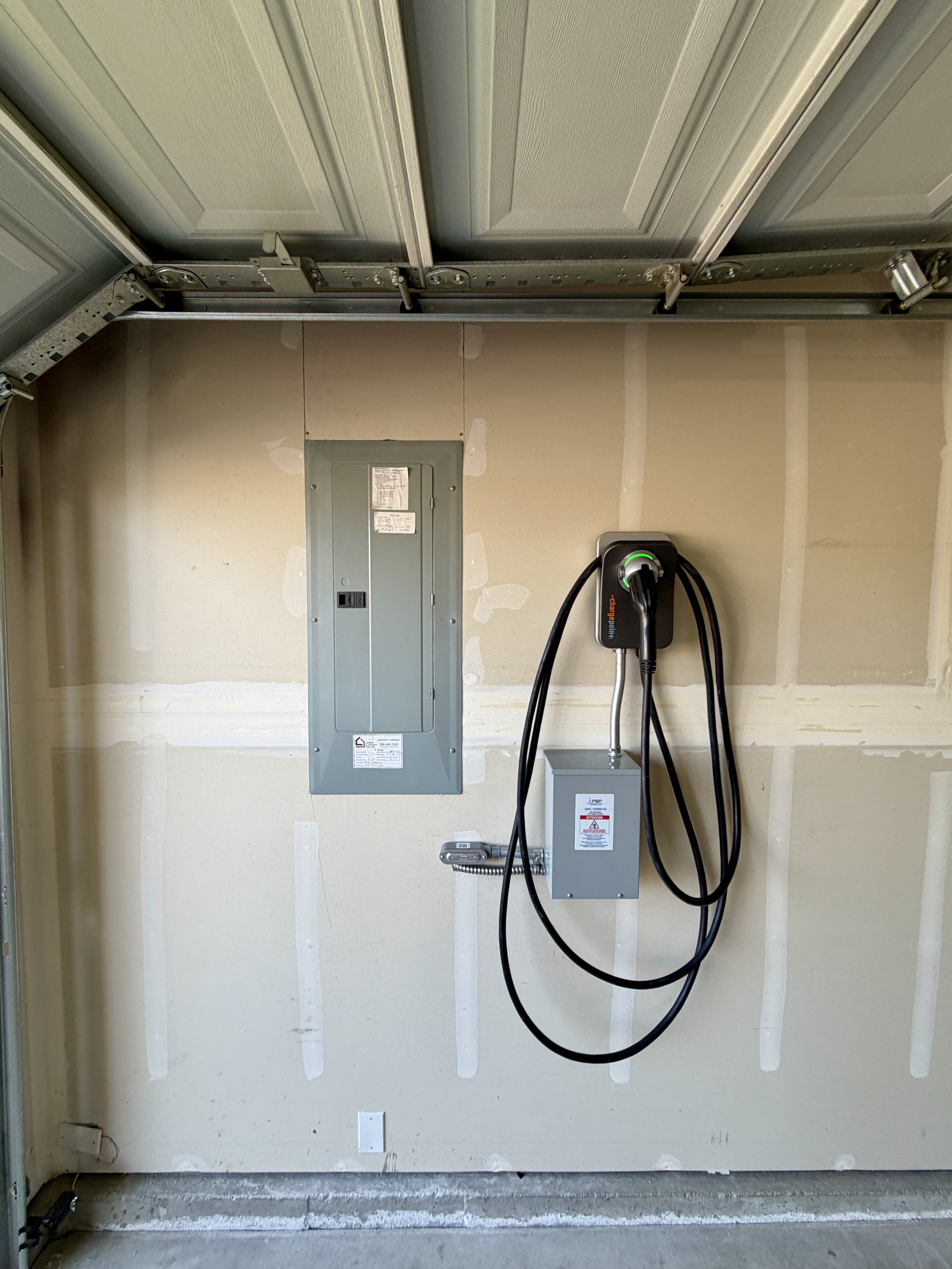
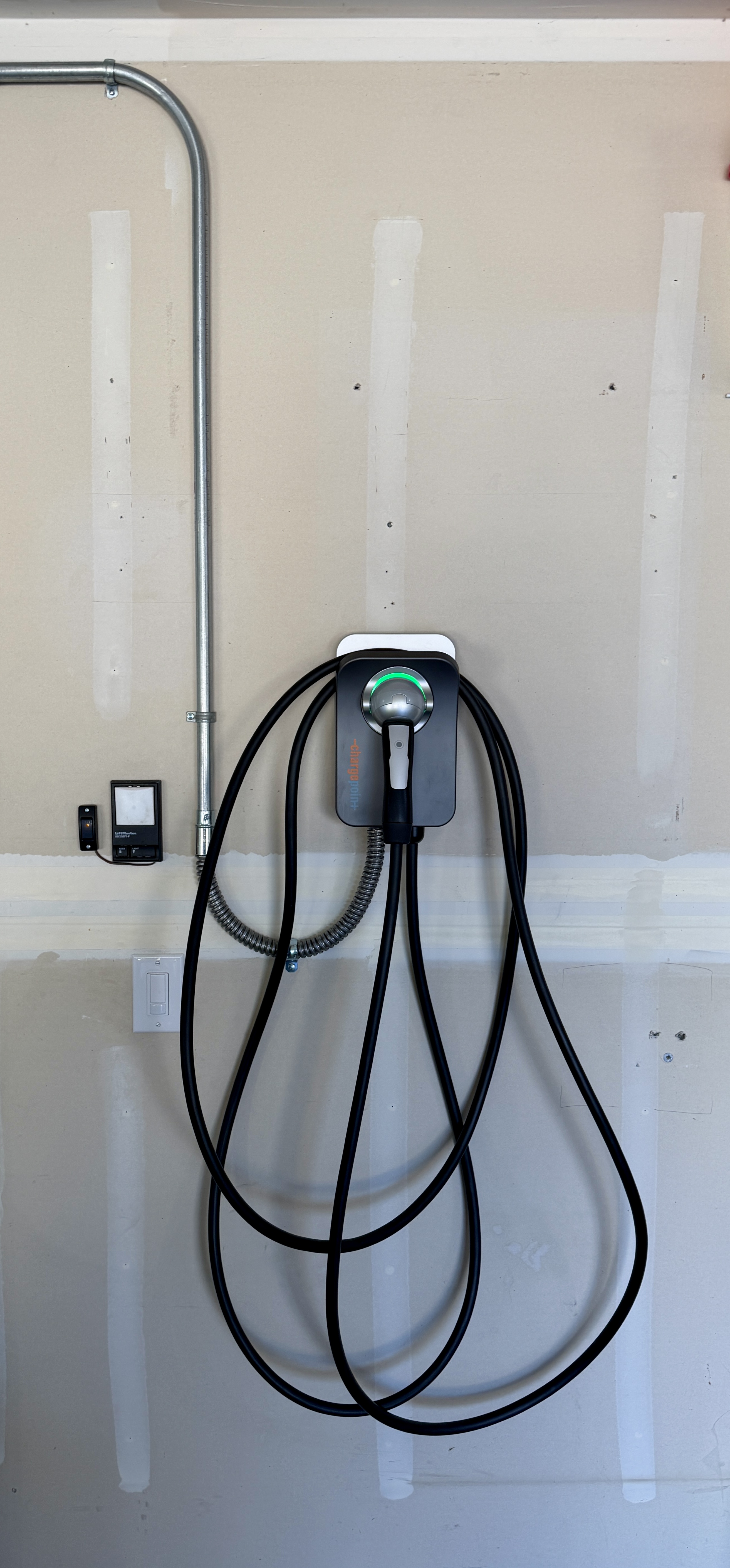
This Treasure Valley home wanted two EV chargers off one panel. The first charger is hardwired: a 48-amp charger on its own dedicated 60-amp circuit, so it always charges at full power with nothing else on that circuit.
This home's panel is rated to handle both chargers running at full power at the same time. But the rest of the house's load isn't constant, and everyday appliances cycling on and off mean the combined draw can occasionally creep past what the panel is rated for. That's what the second charger's load management is there to handle.
Some EV charger brands offer an accessory energy management system that throttles the charge rate up or down to stay under the panel's limit. ChargePoint doesn't support that kind of integration, so for the second charger we paired the Home Flex with third-party load management equipment instead, sometimes called a "load shedder." Rather than throttling, it simply switches the charger off once the panel's total load crosses a set threshold, then switches it back on once the amperage drops back down. Either way, the goal is the same: both vehicles charge off one panel without ever tripping the main breaker.
If your panel is already close to its limit and you're not ready for a service upgrade, a charger paired with load management is often the more affordable way to add a second EV charger, or even your first, if your existing loads leave little headroom.
Common questions from Boise EV owners
Can my panel handle it? Most 200-amp panels can. If yours is a 100-amp panel or already near capacity, we'll walk you through options, which might include a panel upgrade, a sub-panel, or a smart load management device that shares capacity with other large circuits.
Where should the charger go? Ideally close to your panel to keep wire runs short and costs down. Garage walls are the most common location, but we can run to a carport or driveway-adjacent wall too.
Which charger should I buy? We're happy to recommend options based on your vehicle and budget. Popular choices include the Tesla Wall Connector, ChargePoint Home Flex, and Emporia Pro, all of which we've installed in Treasure Valley homes.
How long does installation take? Most EV charger installs are completed in half a day. If a panel upgrade is involved, it will take a full day.
Can I install two EV chargers on the same panel? Often, not without installing an energy management system. If your panel doesn't have enough spare capacity for two full-power chargers running at once, we can pair a charger with a load management device that monitors your panel's load and automatically switches the charger off until there's room again, letting both vehicles charge without a service upgrade.
Built for Treasure Valley homes
Garage configurations, panel locations, and wiring paths vary a lot across Boise, Meridian, and Eagle neighborhoods. Sam has run EV charger circuits in homes ranging from 1960s ranches to brand-new builds, and knows the cleanest, most cost-effective way to route wiring based on your specific home layout. No guessing, no unnecessary drywall damage.
Ready to charge at home?
Give us a call or send a message. We'll assess your panel, plan the route, and give you a clear quote.
Call (208) 509-9807